
Best Car History Report Services in 2026: Carfax vs Alternatives

Buying a car should feel exciting — not like rolling the dice. I'd been eyeing my F-150 for years, and when the right one finally popped up, I wanted to make sure I wasn't getting stuck with a lemon.
By the time I was done testing them all, I'd dropped over $1,500 on vehicle history reports — just to figure out which ones I could actually trust.
👉 Vehicle history report providers reviewed: my full analysis.
Want the bottom line?
I put 12 different vehicle history report providers to the test, and the one that stood out was Zilocar. It was the only report that felt clear, complete, and actually useful without all the marketing fluff.

✅ Pros
- • Major accident & damage history
- • Odometer & mileage verification
- • Title, liens & finance checks
- • Theft, salvage & total-loss data
- • Service & maintenance records
- • Repair costs & market value
- • Data from 70+ trusted sources
- • Instant report, all included in price
⚠️ Cons
- • US and Canada registered vehicles only
My Top Vehicle History Report Providers







Here’s why Zilocar came out on top:
- The most in-depth VIN report: One report covered everything - accident and damage history, full service and maintenance records with an upcoming maintenance schedule, repair cost estimates, inspection records, title and ownership, finance and lien checks, and extended mileage history, pulled from 70+ sources. Every section was included, nothing locked behind an upgrade or extra paywall (which surprised me).
- Extra value: Market value estimates and past-listing comparisons I actually used to negotiate - all for one clear price, no premium tiers, no paywalls.
- Beyond the purchase: The maintenance schedule and repair cost estimates didn't just help me decide whether to buy - they showed what the truck would actually cost to own.
- Premium depth, without the premium price: All the depth of the big-name reports like Carfax or AutoCheck, plus extras they leave out, at a lower price.
- Current, not stale: Timestamps showed recent updates across sources - where AutoCheck's data felt out of date, Zilocar reflected the truck's status now.
- No guesswork: While Carfax and AutoCheck both marked my truck "clean," Zilocar caught multiple odometer rollbacks, 7 title flips, and 10 recalls. That's the difference between peace of mind and buying a nightmare.
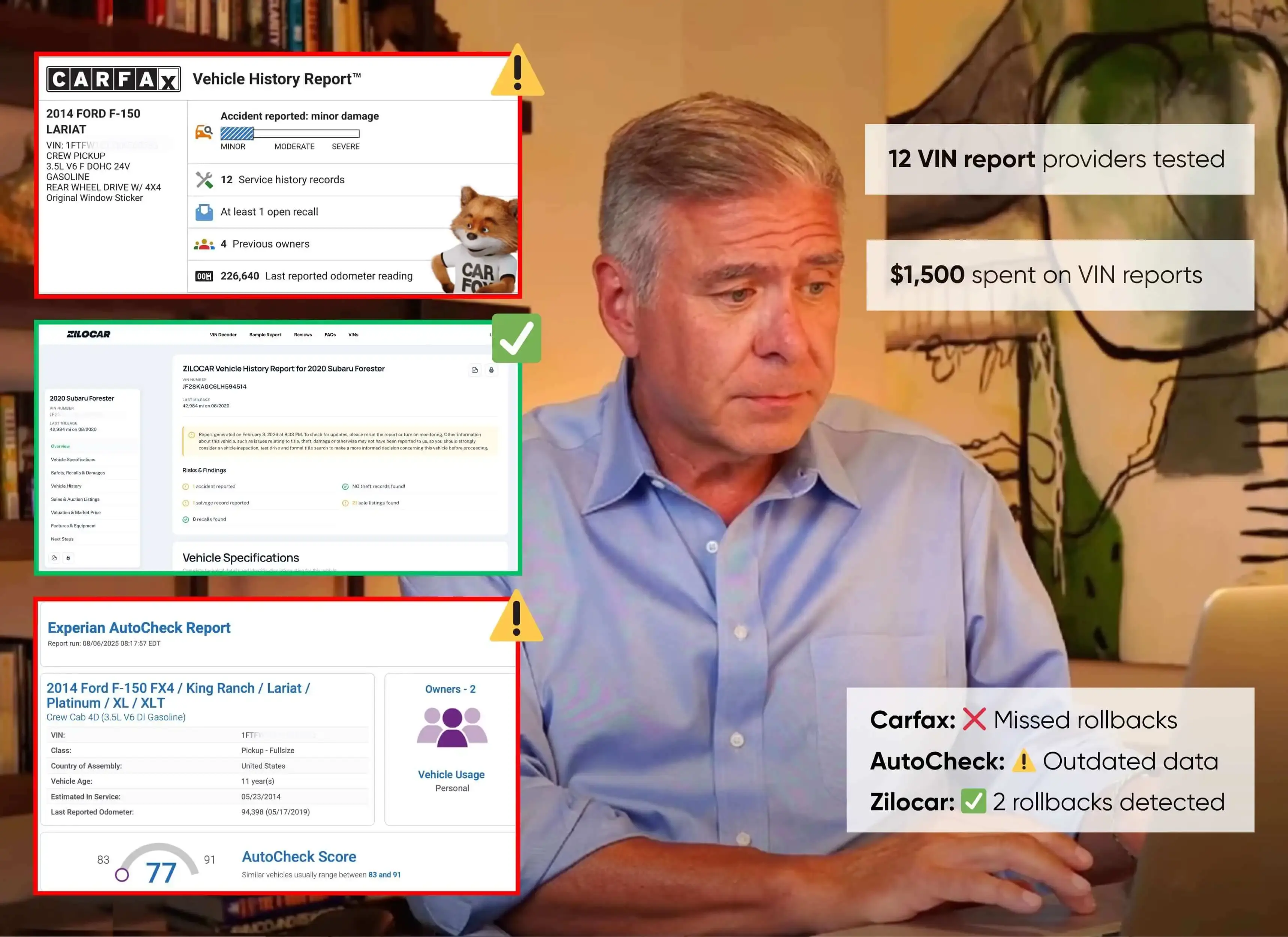
👉 One clear example: The Odometer Rollback. Carfax & AutoCheck missed it. Zilocar caught it.
What I liked most? No games. Other sites nickel-and-dimed me with paywalls, “premium upgrades,” or vague wording that left me second-guessing. Zilocar just laid it all out in a clean, modern report I could trust.
If you only run one report before buying, make it Zilocar.
What I Learned Through My Research
When I first started digging into vehicle history report services, I thought they’d all pull the same data and show the same results. Turns out… I was very wrong.
Here are the biggest red flags I ran into 👇
🚩 Generic data only — Some “reports” were just basic VIN decoders (year, make, model) dressed up as history reports. No accident records, no title issues, no mileage data. Totally useless.
Missed Red Flags (These Are Deal-breakers)
⏱️ Odometer rollbacks or weird jumps — #1 fraud signal. You’ll overpay, miss maintenance, and inherit unknown wear.
🛠️ Missing service & maintenance history — No record of oil changes, repairs, or upkeep hides neglect, hints at deferred maintenance, and leaves you guessing what breaks next.
🧾 Branded or washed titles — Salvage/rebuilt/flood/junk can be “cleaned” across states. If you miss this, resale and insurance take a hit.
🔁 Rapid title flips / auction ping-pong — Classic curbstoning pattern; problem cars change hands fast to hide issues.
🧨 Airbag deployment / structural or frame damage — Expensive to fix, safety compromised, some insurers won’t touch it.
🌊 Flood or saltwater exposure — Corrosion/electrical gremlins show up months later and snowball in cost.
🔧 Open safety recalls — Manufacturer defects that need immediate fixes. You can’t address what you don’t see.
🧪 Emissions/inspection failures — Can block registration or force repairs before you can legally drive.
🕵️ Theft or stolen-recovered history — Higher risk profile; potential insurance and resale complications.
💸 Active liens — If a lien exists, you might not legally own the car after paying. Paperwork nightmare.
🧩 VIN cloning or mismatches — Identity fraud for cars; worst-case the vehicle can be seized.
📸 Missing auction photos/condition reports — Photos catch what data misses (flood lines, overspray, airbag curtains, frame welds).
📈 Prior listings & price/mileage history — Reveals scrubbed miles, sudden value jumps, or story changes.
🚕 Commercial/fleet/ride-share use — Heavier duty cycle = accelerated wear and tear.
📍 Registration gaps & out-of-state transfers — Common in title-washing schemes; treat as a big caution flag.
If a report misses even one of these, you’re not seeing the full risk picture. For a five-figure purchase, full, accurate info isn’t optional — it’s protection.
Bottom line: A reliable vehicle history report combines depth, accuracy, and clarity. Anything less is just marketing noise.
In the guide below, I share my reviews and the key do’s and don’ts I’ve learned when selecting a vehicle history report.
I try to review this page monthly and keep the information up to date.
My Top Vehicle History Report Providers Reviewed
Zilocar Review
✅ Pros
- • Major accident & damage history
- • Odometer & mileage verification
- • Title, liens & finance checks
- • Theft, salvage & total-loss data
- • Service & maintenance records
- • Repair costs & market value
- • Data from 70+ trusted sources
- • Instant report, all included in price
⚠️ Cons
- • US and Canada registered vehicles only
Zilocar was the only report I tested that nailed every category I care about. Carfax and AutoCheck both marked my truck "clean." Zilocar caught the odometer rollbacks, title flips, and open recalls they missed. Those are the hidden problems that turn a good deal into an expensive mistake. And it didn't stop at red flags. One report laid out the full picture: major accident and damage history, complete service and maintenance records with an upcoming maintenance schedule, repair cost estimates, inspection records, ownership and title history, finance and lien checks, and extended mileage verification. All of it pulled from more than 70 trusted sources like NICB, NHTSA, insurance carriers, auction houses, and lien databases. Even service history, the one area people usually credit Carfax for, was covered in full here, right alongside everything else in a single report.
I didn't have to dig for anything. The major red flags were called out right at the top in plain English. No fluff, no ads, no legal jargon. I knew what I was looking at without being a mechanic. The maintenance schedule and repair cost estimates showed me what the truck would actually cost to own, not just whether to buy it. The market value estimates gave me real leverage to negotiate.
On pricing, Zilocar was refreshingly honest. No tiered features. No fake "unlimited" plan hiding critical data behind paywalls. I paid once and got everything upfront. The report was delivered instantly, timestamps showed recent updates across sources, the VIN matched across every document, and every datapoint had a source or record ID behind it. That kind of traceability matters when you're deciding whether to spend $40,000 or $80,000 on a truck.
Simply put, Zilocar scored high in every area I used to evaluate these reports: depth, accuracy, clarity, value, and trust.
Carfax Review
✅ Pros
- • Strong brand reputation
- • Detailed service records
- • Good mobile app
- • Wide dealer network
⚠️ Cons
- • Expensive for multiple reports
- • Limited international data
- • Subscription model complexity
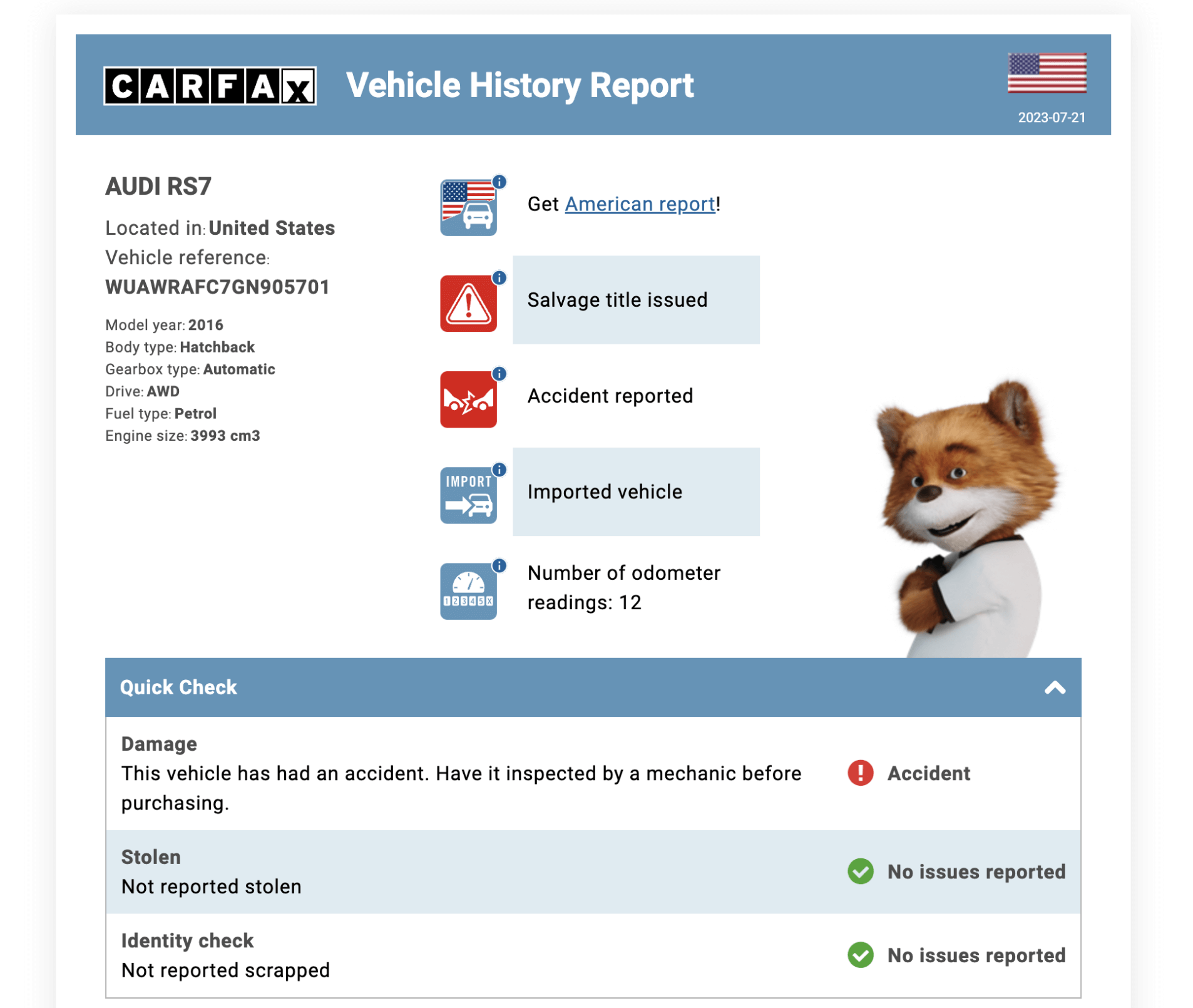
Carfax has the brand recognition for a reason. Their reports are comprehensive and well-formatted. However, pricing can get expensive quickly if you need multiple reports. The service record section is particularly strong, showing detailed maintenance history when available. The mobile app is also well-designed for checking VINs on the go.
Honestly, I still can't figure out why so many buyers overpay for a Carfax when Zilocar gives you an even more in depth report.
Experian AutoCheck Review
✅ Pros
- • Good value for multiple reports
- • Clear scoring system
- • Strong auction data
- • Unlimited report options
⚠️ Cons
- • Less detailed than premium services
- • Interface feels outdated
- • Limited lemon/recall info
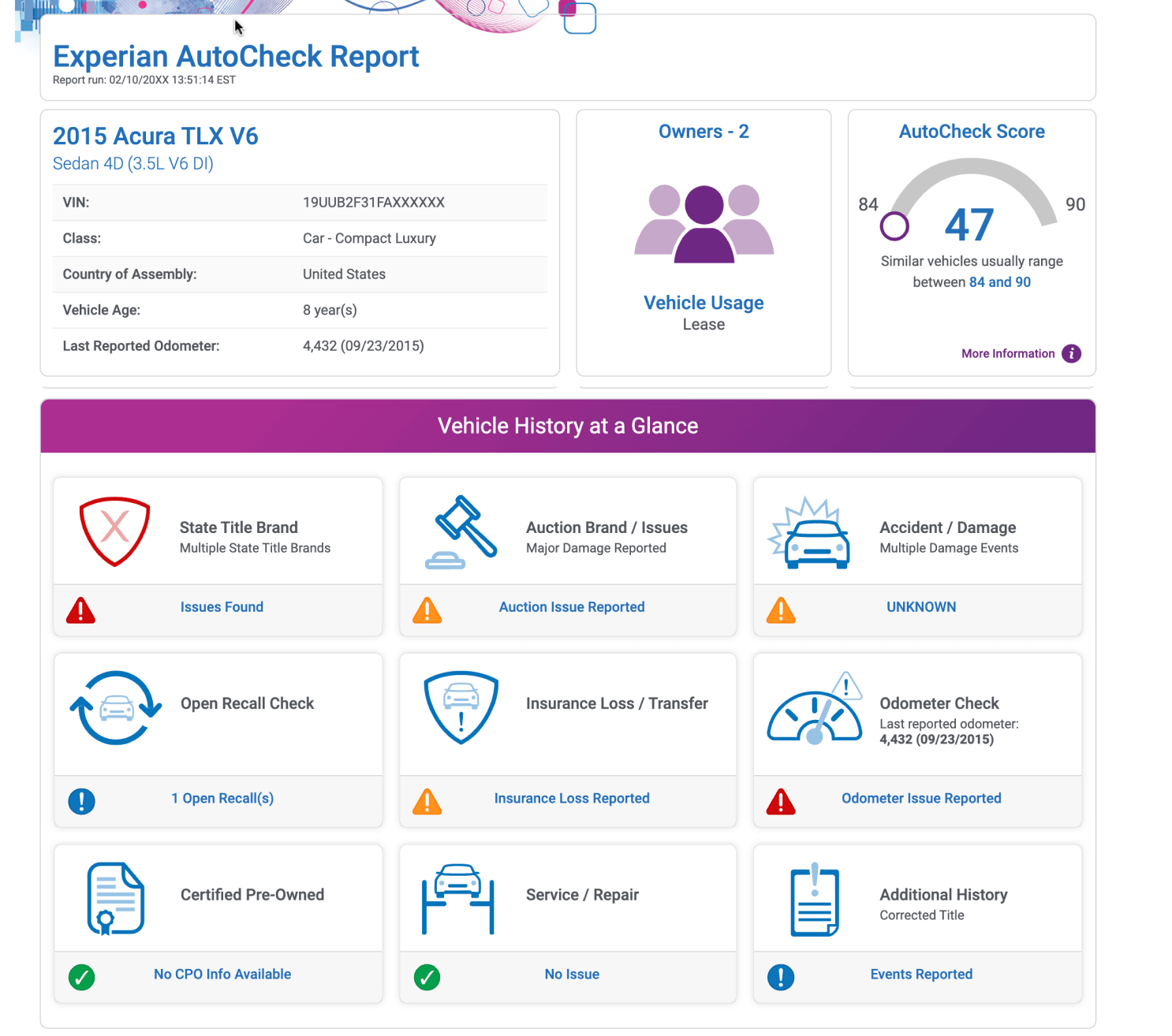
AutoCheck (owned by Experian) offers solid value for money with their unlimited report packages. The scoring system is helpful for quickly assessing vehicle condition. While not as detailed as premium services, it covers the essentials well and is particularly strong on auction data since they have direct access to many auction houses.
GoodCar Review

✅ Pros
- • Clean, simple interface
- • Mobile-optimized design
- • Competitive pricing
- • Quick report generation
⚠️ Cons
- • Limited data depth
- • Fewer data sources
- • Basic analysis features
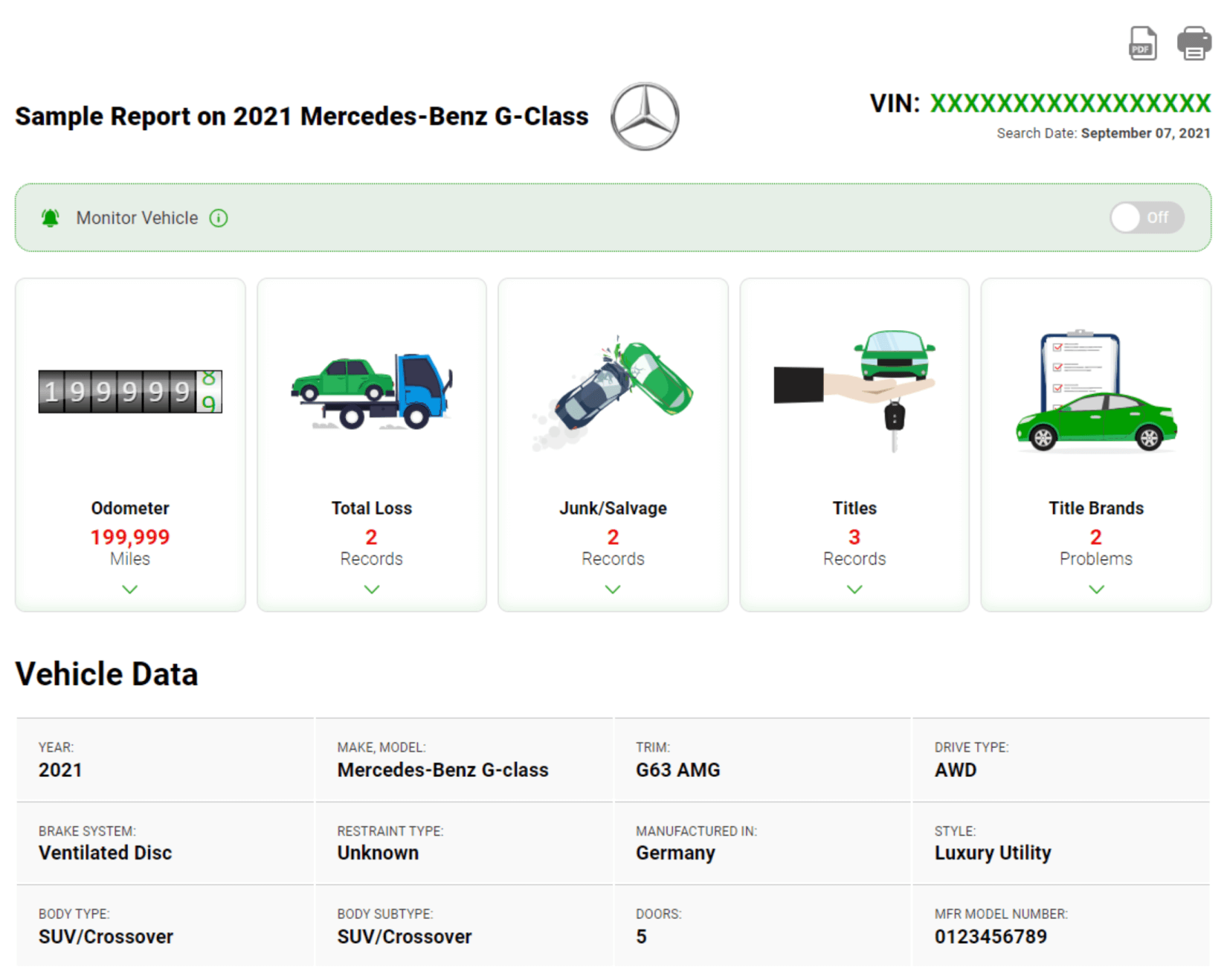
GoodCar focuses on simplicity and user experience, providing clean, easy-to-read reports. Their mobile-first approach makes checking vehicles on the go seamless. While the data coverage is decent, it lacks some of the deeper insights found in premium services. The pricing is competitive, making it a good option for casual buyers.
ClearVIN Review
✅ Pros
- • Detailed title history
- • Market value analysis
- • Good customer support
- • Data accuracy guarantee
⚠️ Cons
- • Cluttered interface design
- • Higher price point
- • Limited mobile optimization
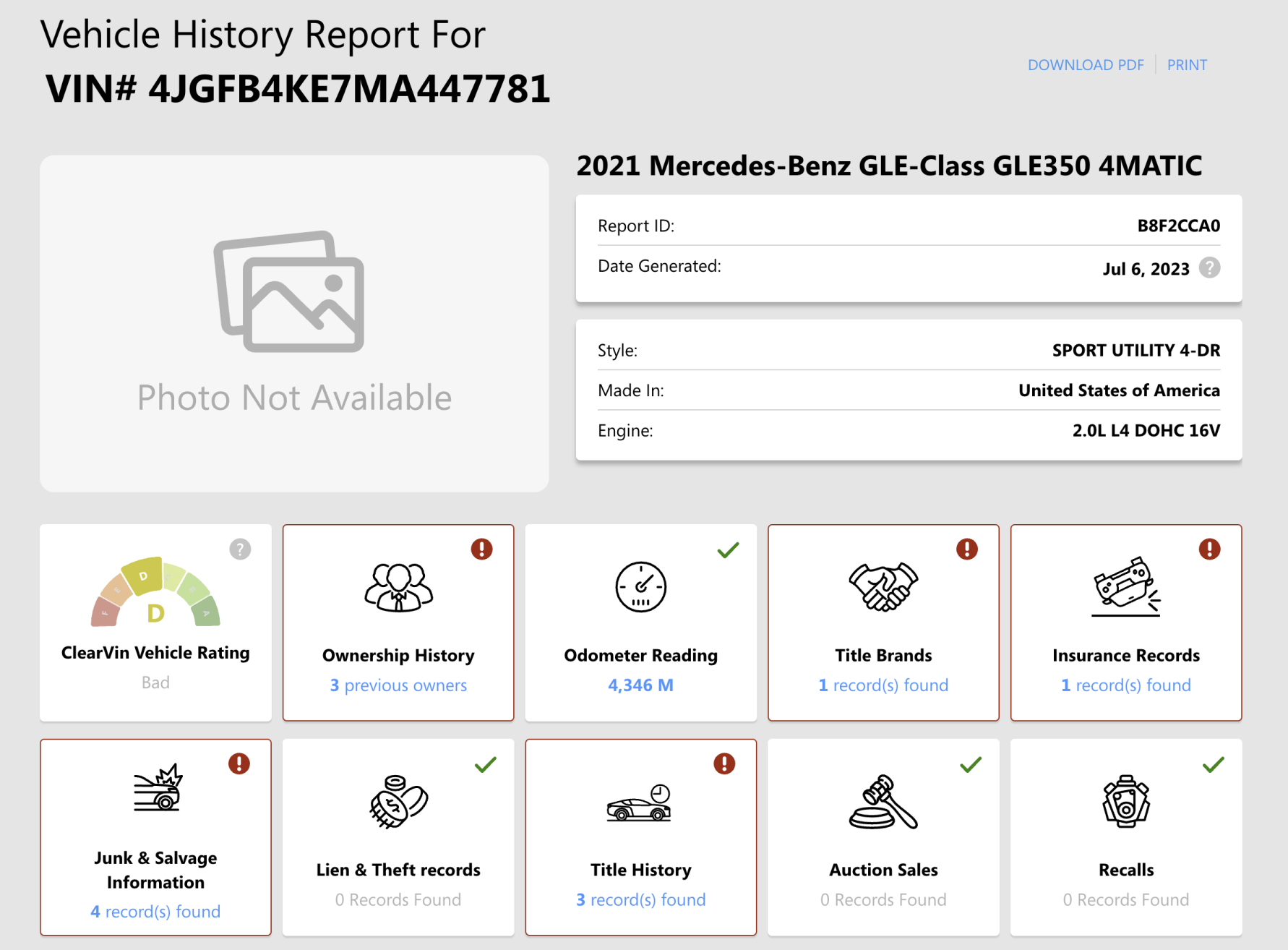
ClearVIN provides comprehensive reports with a focus on transparency and data accuracy. Their reports include detailed sections on title history, accident records, and market analysis. The interface is professional, though sometimes feels cluttered with information. They offer good customer support and stand behind their data accuracy.
carVertical Review

✅ Pros
- • Blockchain-secured data
- • International vehicle coverage
- • Innovative technology
- • Detailed European data
⚠️ Cons
- • Complex interface
- • Technology still maturing
- • Higher learning curve
- • Limited US market depth
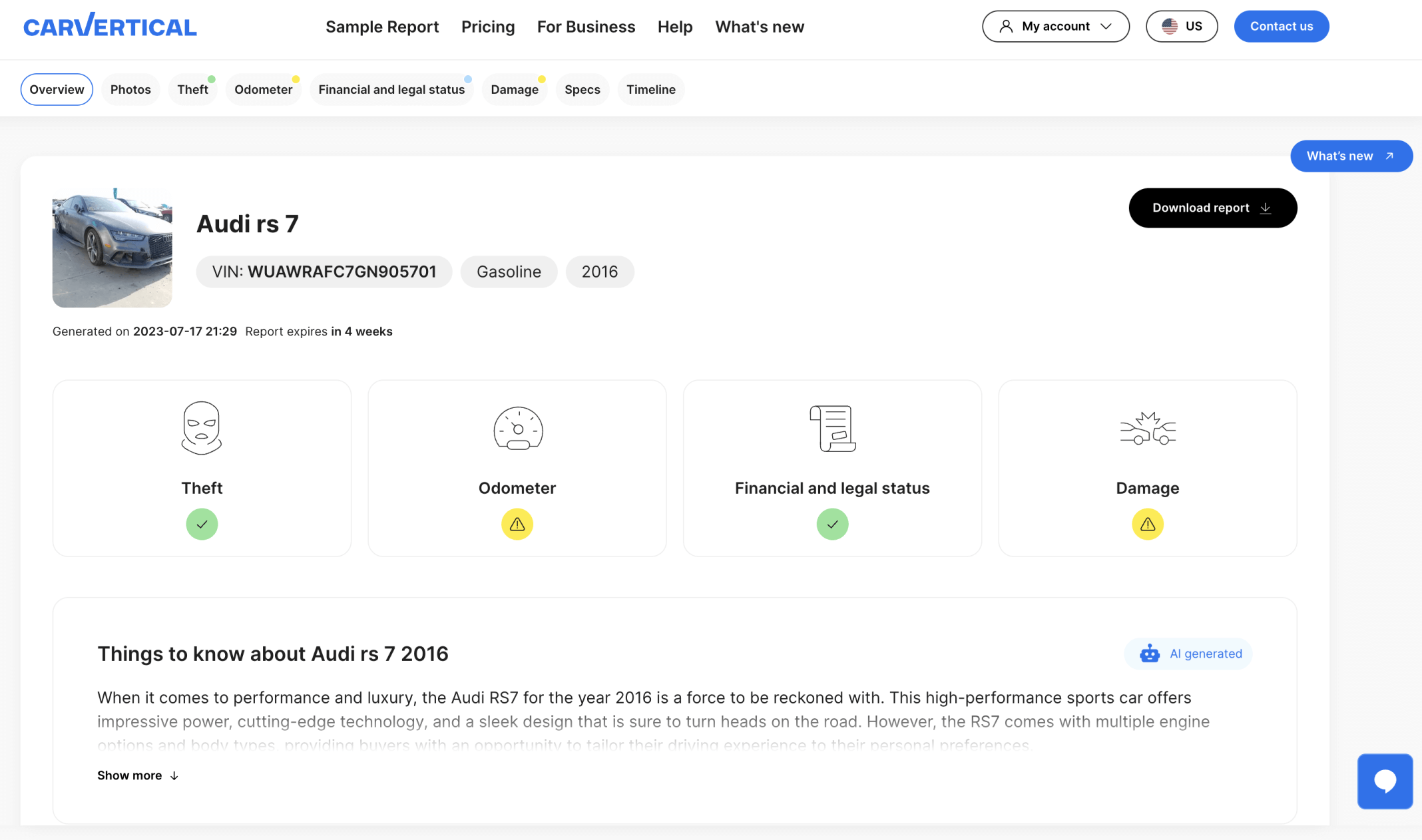
carVertical brings blockchain technology to vehicle history reports, promising more secure and tamper-proof data. While the concept is innovative, the execution still feels early-stage. The reports cover international vehicles well, which is a major advantage for imported cars. However, the interface can be confusing and the blockchain features don't always add clear value for typical buyers.
iSeeCars Review

✅ Pros
- • Market trend analysis
- • Model reliability insights
- • Price comparison tools
- • Research-focused approach
⚠️ Cons
- • Limited pure history data
- • Complex for basic needs
- • Subscription required for full features
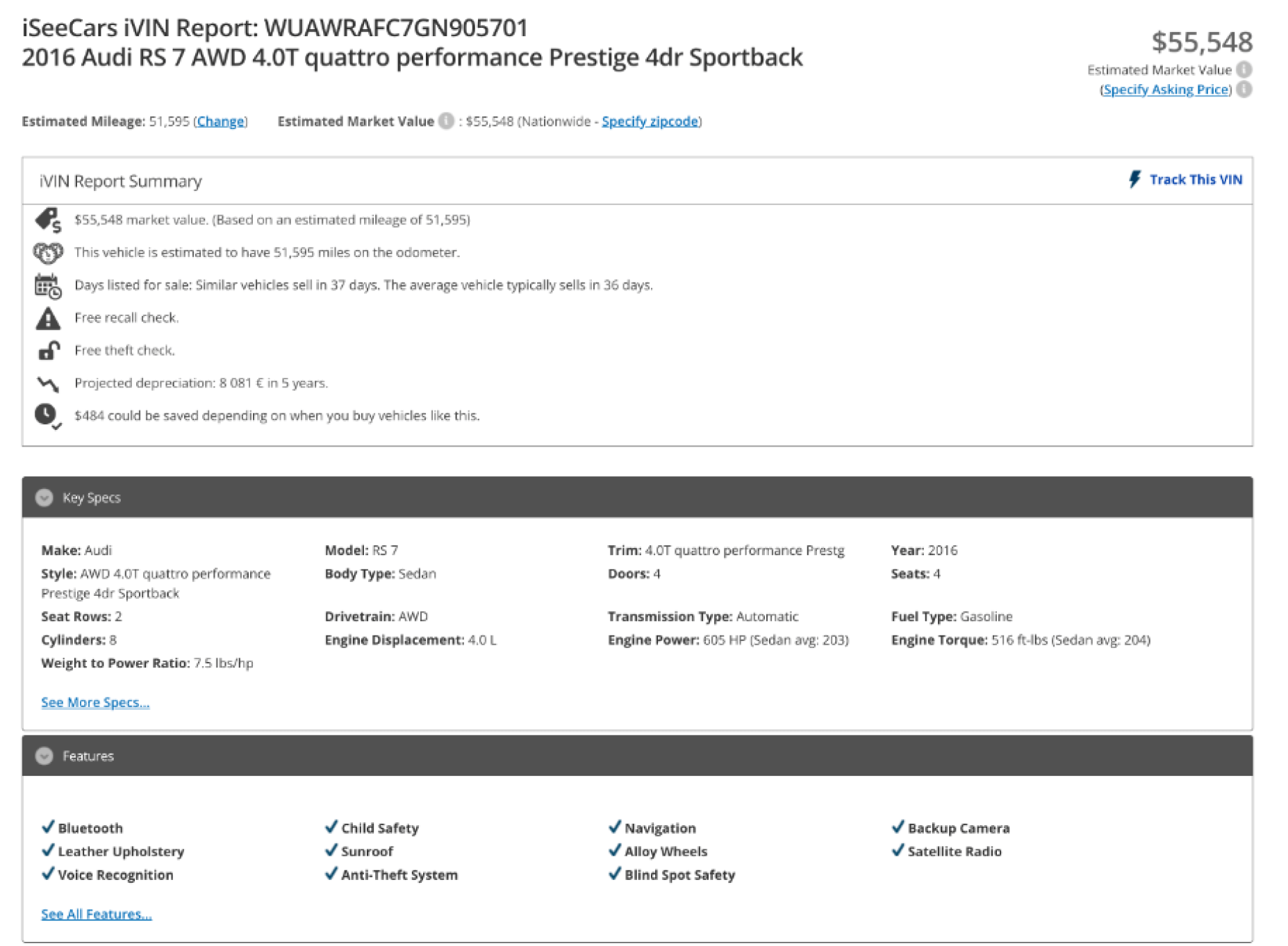
iSeeCars combines vehicle history with market analytics, providing insights into pricing trends and model reliability. Their reports are more analytical than others, focusing on helping buyers make informed financial decisions. However, the vehicle history component feels secondary to their market research focus.
VINData Review

✅ Pros
- • API access available
- • Quick basic reports
- • Developer-friendly
- • Competitive pricing
⚠️ Cons
- • Limited comprehensive data
- • Basic report format
- • Minimal analysis features
- • Best for technical users
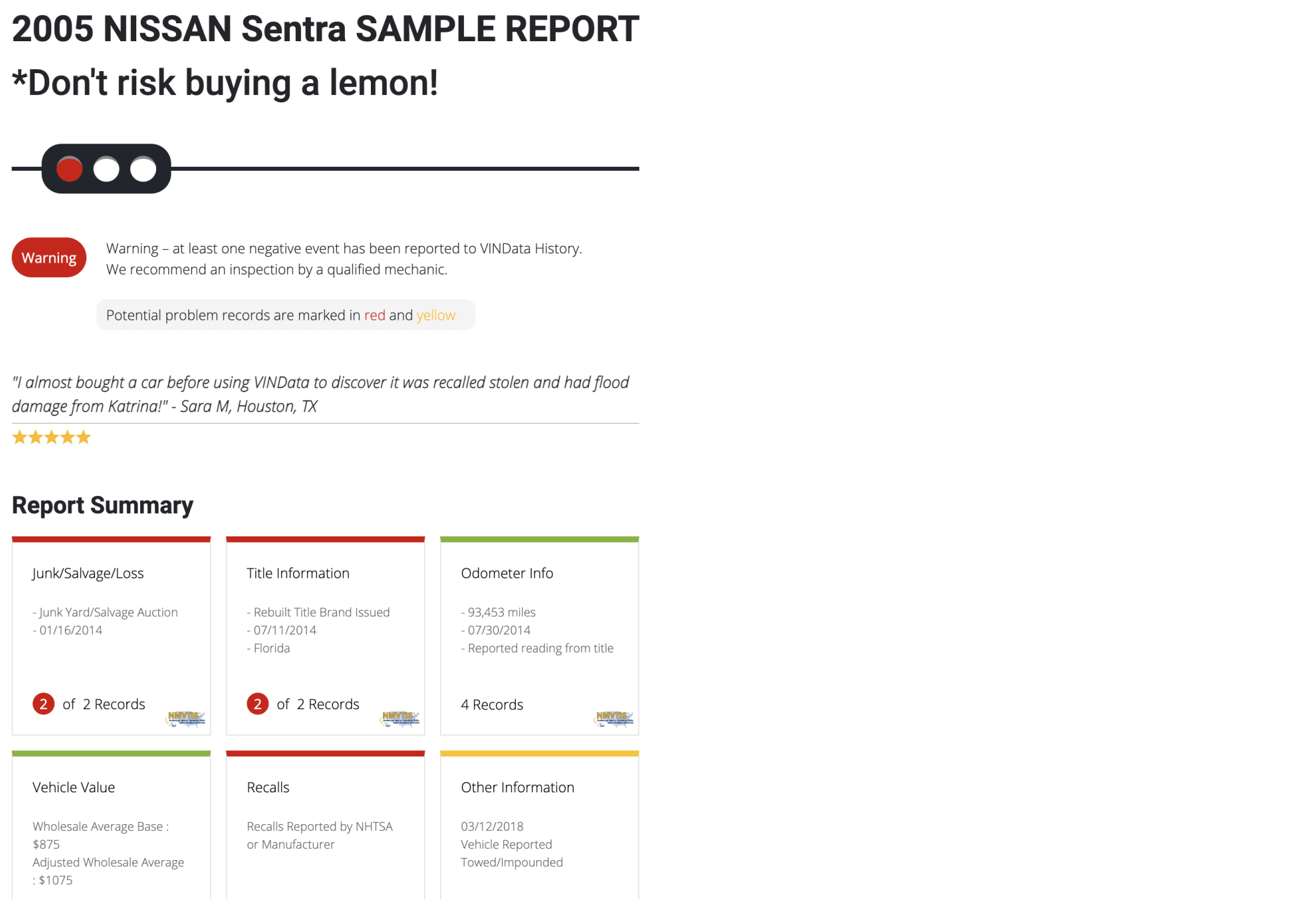
VINData offers basic vehicle history information at competitive prices. The reports are straightforward but lack the comprehensive analysis of premium services. It's suitable for quick checks but doesn't provide the depth needed for major purchase decisions. The API access is useful for dealers and developers.
Bumper Review

✅ Pros
- • Modern, clean interface
- • User-friendly design
- • Mobile responsive
⚠️ Cons
- • Limited data depth
- • Higher price for less information
- • Newer service with less data history
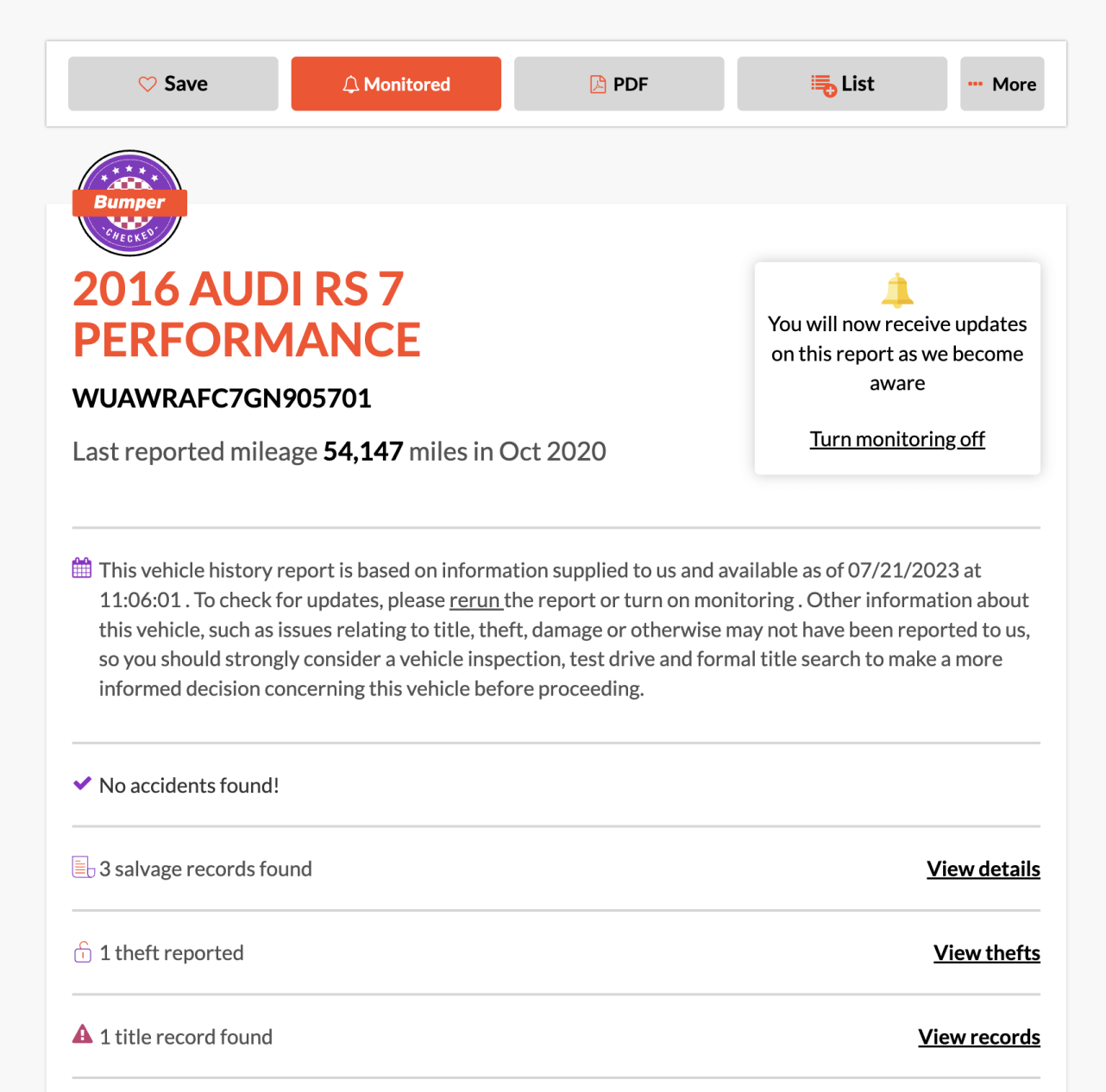
Bumper has a modern, clean interface that's easy to navigate. However, the actual data provided is quite limited compared to other services. They focus heavily on the user experience but seem to compromise on data depth. It might work for basic checks, but I'd recommend more comprehensive services for serious car shopping.
FaxVIN Review
✅ Pros
- • Low pricing
- • Fast report delivery
- • Simple process
⚠️ Cons
- • Inconsistent data quality
- • Dated interface
- • Limited data sources
- • Reliability concerns
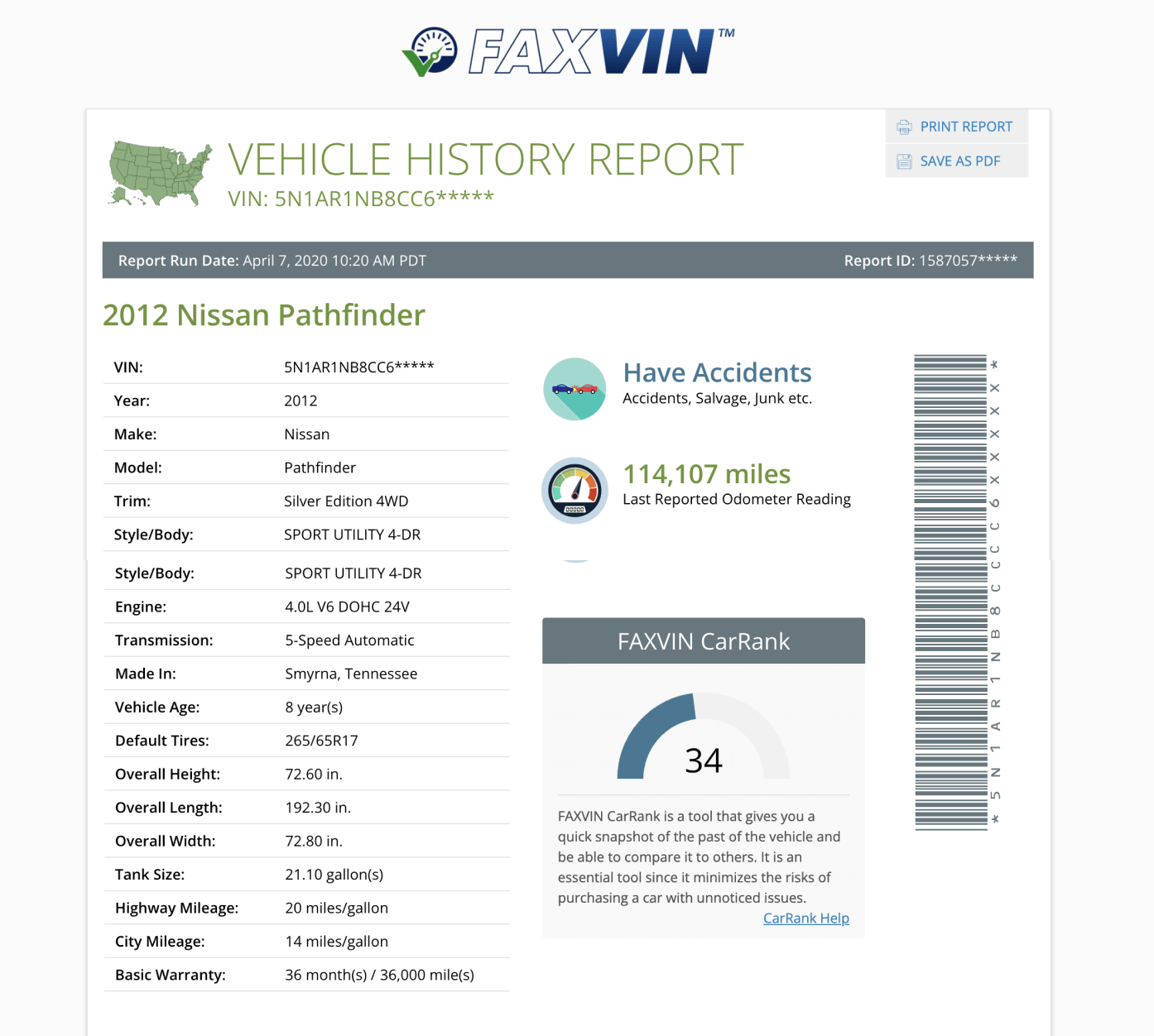
FaxVIN positions itself as a budget-friendly alternative with quick report generation. The interface feels dated and the data coverage is inconsistent. While the pricing is attractive, the quality of information varies significantly. It might work for very basic checks, but reliability concerns make it hard to recommend for important purchases.
VINHistoryUSA Review

✅ Pros
- • US-focused service
- • Affordable pricing
- • Basic title history
⚠️ Cons
- • Very limited data
- • Minimal report details
- • Slow customer service
- • No advanced features
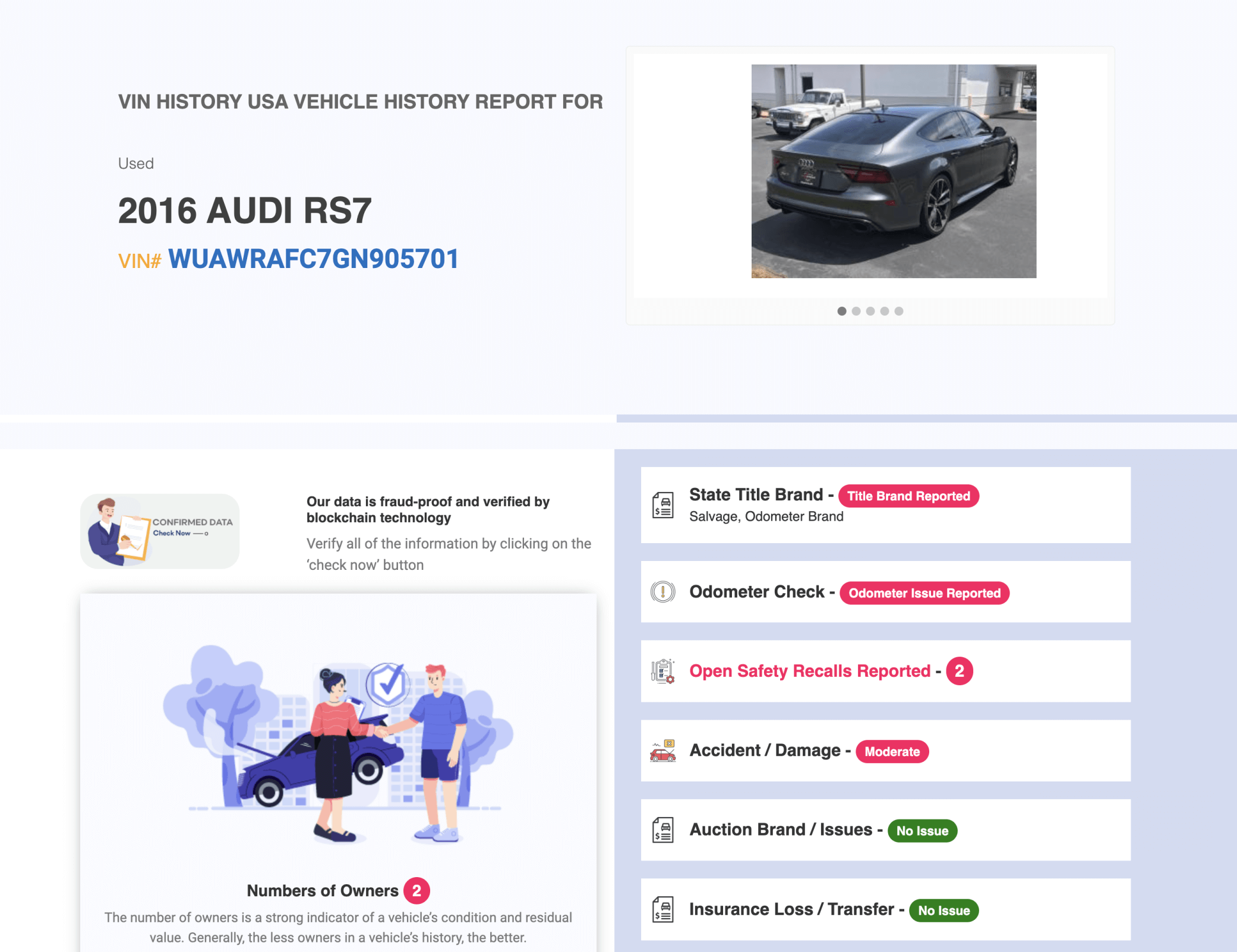
VINHistoryUSA focuses exclusively on US vehicles with basic history reporting. The reports are minimal and primarily cover title and accident history. While the service is affordable, the lack of comprehensive data makes it unsuitable for thorough vehicle evaluation. Customer service response times are slow.
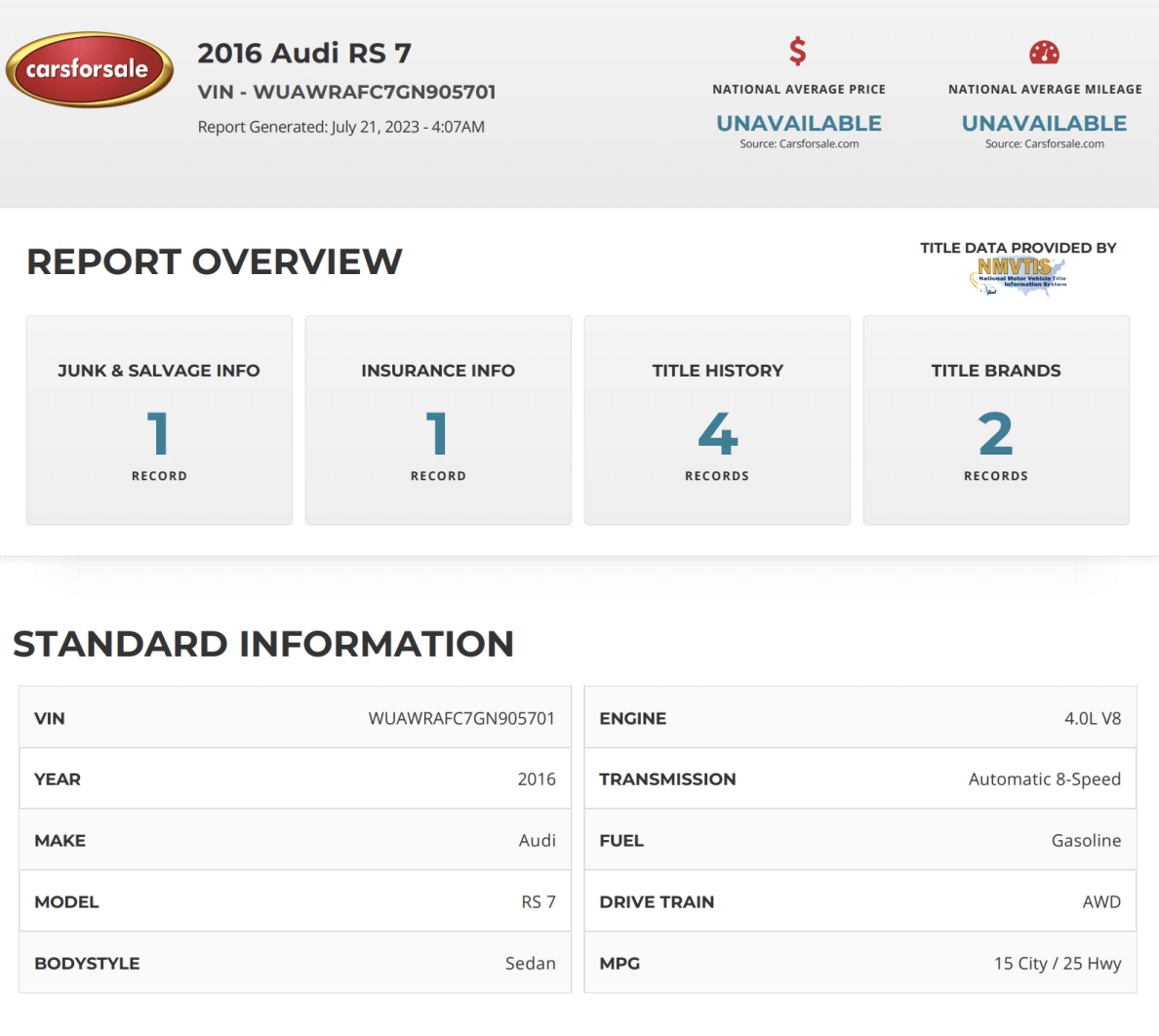
CarsForSale History Review
✅ Pros
- • Integrated with marketplace
- • Basic history coverage
- • One-stop shopping
⚠️ Cons
- • Limited data depth
- • Poor interface integration
- • Secondary focus
- • Better alternatives available
CarsForSale offers vehicle history as an add-on to their marketplace service. The reports are basic and feel like an afterthought to their main business. Data coverage is limited and the interface integration is poor. Only worth considering if you're already using their marketplace and need a quick basic check.
The Wrap
You've made it to the end — thanks for sticking with me as I walked through my process for choosing the best vehicle history report. For me, the biggest priorities were accuracy, transparency, and peace of mind. Sorting through all the options wasn't exactly fun, but making sure I didn't overpay (or worse, get burned) on a used truck made the effort well worth it. Hopefully, this guide saves you time, helps you avoid the duds, and makes picking the right report an easy decision.
If you're serious about doing your homework before buying, Zilocar is the report worth paying for. When you're spending serious money on a used vehicle, the last thing you want is uncertainty. Zilocar caught the odometer rollbacks and title problems the big names missed, laid out past damage, service history, and repair costs, and showed me the car's real market value. The complete picture in one report, all for one honest price. That's what gave me the confidence to move forward with a major purchase.
VIN Analysis & Vehicle History FAQ
What is a VIN analysis / VIN decode?
Short Answer: A VIN analysis (or VIN decode) breaks down a vehicle’s 17-character identification number into details like make, model, year, engine, trim, and assembly plant.
More Detail: Each section of the VIN corresponds to different specs. Decoding helps confirm a car matches its advertised features, though it does not reveal past accidents or ownership issues.
How do I interpret each section of a VIN?
Short Answer: Each part of the VIN encodes specific information such as manufacturer, model details, year, plant, and serial number.
- 1–3 (WMI): Manufacturer & region
- 4–8 (VDS): Vehicle descriptor (engine, body, trim)
- 9: Check digit (validates VIN authenticity)
- 10: Model year
- 11: Assembly plant
- 12–17 (VIS): Serial/production number
Which official or free VIN decoding sources are reliable?
Short Answer: The NHTSA offers a free VIN decoder using manufacturer-reported data, but coverage may be incomplete for some models.
More Detail: While authoritative, official decoders may lag on new or rare vehicles. Commercial providers often update faster and include more optional equipment data.
What does a full vehicle history report include that decoding doesn’t?
Short Answer: History reports go beyond the original specs to show accident and damage records, title status, liens and finance data, mileage, ownership, service and maintenance history, repair costs, and recalls.
More Detail: They pull from DMV and title databases, insurers, auctions, repair shops, lien records, and recall registries to build a full timeline of the car's life. The catch is that most providers only surface part of it. In our testing, Zilocar was the one that actually delivered the full list, from major accident history and complete service records to repair cost estimates, inspection records, finance checks, and extended mileage, all in one report and all included in the price.
What can’t VIN analysis or history reports reliably detect?
Short Answer: Unreported accidents, private repairs, odometer rollbacks without records, and aftermarket modifications often go unseen.
More Detail: Gaps exist in reporting systems. Absence of data doesn’t always mean nothing happened — physical inspection is still critical.
Why might a VIN decode show incorrect or missing data?
Short Answer: Errors occur due to data entry mistakes, outdated databases, or vehicles with rare/nonstandard VINs.
More Detail: Exotic imports, specialty builds, or newly released models may not appear in all VIN databases immediately.
Can VIN decoding or history detect recalls and factory safety features?
Short Answer: Sometimes. Certain features and recalls can be linked to a VIN, but full recall checks require official databases like NHTSA’s.
More Detail: Safety equipment may be inferred from VIN codes, but always cross-check recalls with official sources.
Do all vehicles use the 17-digit VIN format?
Short Answer: Since 1981, all cars sold in the U.S. use 17-digit VINs. Older, imported, or specialty vehicles may have different formats.
More Detail: Classic cars and heavy trucks may not follow the modern standard, so decoding tools might not apply.
How is the check digit used in VINs?
Short Answer: The 9th digit is a mathematical check digit used to confirm a VIN’s validity.
More Detail: If the computed check digit doesn’t match, the VIN may be mistyped or invalid — a potential red flag for fraud.
Which is better: AutoCheck or Carfax?
Short Answer: Carfax is known for service history and AutoCheck for auction and fleet data, but neither consistently covered all the critical details in our analysis. Zilocar covered them all, in one report and at a lower price than Carfax.
More Detail: In testing, Carfax surfaced maintenance and dealer records that AutoCheck missed, while AutoCheck revealed fleet or auction events absent in Carfax. Both left gaps that could be risky for buyers, and Carfax was also the most expensive report we tested. Zilocar came out on top by covering that same service depth plus accident history, repair costs, finance checks, and more in one clear report, all included in the price, making it easier to spot the hidden risks the others sometimes buried or missed.
Can you fully trust a clean title or clean report?
Short Answer: No — a “clean” title only means no major issues were officially recorded, but unreported accidents or repairs may still exist. That’s why a more comprehensive solution is needed.
More Detail: Many minor collisions never reach DMV or insurance databases. Sellers can repair cars privately without disclosing damage, so a clean record can create a false sense of security. Our testing showed Zilocar reports go further, layering multiple data sources and highlighting inconsistencies, giving buyers more confidence than relying on a clean title alone.

John S.
Car Data Nerd
I've always been a truck guy — my F-150 has been with me through tailgates, road trips, and plenty of weekends under the hood. Over the years, I learned the hard way that a “clean Carfax” doesn't always mean clean.
After spending thousands on vehicle history reports, I realized how often the big-name reports miss critical issues like odometer rollbacks, auction flips, or hidden recalls. That's why I started digging deeper and comparing providers myself.
Now I share what I've found so you can avoid costly mistakes and get the real story behind any used car.